





Singapore has a wide diversity of architectural styles. Take a stroll around Chinatown, Katong, or Kampong Gelam to see shophouses from various eras or marvel at the distinctive black-and-white bungalows, which are now cafes, bars, or just residential buildings. These are the most stunning traditional architecture in Singapore, including technicolour shophouses, traditional vernacular buildings, and surviving structures from Singapore’s colonial past.
Black and White Houses
Around 500 black-and-whites can now be found in exclusive neighbourhoods such as Dempsey Road, Rochester Park, and Adam Park, making them an iconic sight in Singapore. They were developed by the British Administration’s Public Works Department (PWD) for British expatriates in the early twentieth century and before World War Two as military accommodation.
The design, also known as Tudorbethan Style, incorporates tropical and art deco features into a conventional Victorian home. Traditional Malay architecture has also influenced the design. The black-and-white dwellings are built on stilts to defend against snakes, tropical insects, and flooding during the rainy season, and were inspired by the practice of constructing homes on stilts.
Burkill Hall
Burkill Hall in the Singapore Botanic Gardens, built in 1868, has a long and illustrious history, having served as the residence of the Botanic Gardens’ superintendents and directors for more than a century. Here is something you probably did not know that for more than 50 years and the structure was mistaken for a black-and-white cottage. It is, however, Southeast Asia’s and maybe the world’s sole remaining Anglo-Malayan plantation-style mansion.
Burkill Hall predates the black-and-white style, which first began in 1898, according to the Gardens’ director Nigel Taylor, who discovered it in 2013. Burkill Hall was likewise covered in white paint in photos taken from the late 1800s to 1959.
House No. 1 at Chek Jawa

There are relics of Singapore’s old colonial history among the dense trees on the eastern part of Pulau Ubin. House No. 1 was once a resort home for British Chief Surveyor Langdon Williams and was built during the colonial period by the British. It is now used as a visitor centre for Chek Jawa visitors.
The two-story structure is on a 43,324 square feet plot of land, replete with a water tower and jetty. The structure which was built in the 1930s was inspired by traditional Tudor-style homes in England during the first half of the 16th century, and features black timber frames with masonry infill walls, steep pitched roofing with clay tiles, and a working fireplace in the ground-floor sitting room.
Koon Seng Road Shophouses
The famous pastel shophouses along Koon Seng Road are a defining feature of the Joo Chiat and Katong areas. These heritage treasures, built in the 1920s, were formerly home to the Peranakan Chinese. They have now been preserved for their historical design, which combines a unique blend of Chinese and Malay elements, as evidenced by the rich details, motifs, and tiles that adorn each home.
Malay Heritage Centre
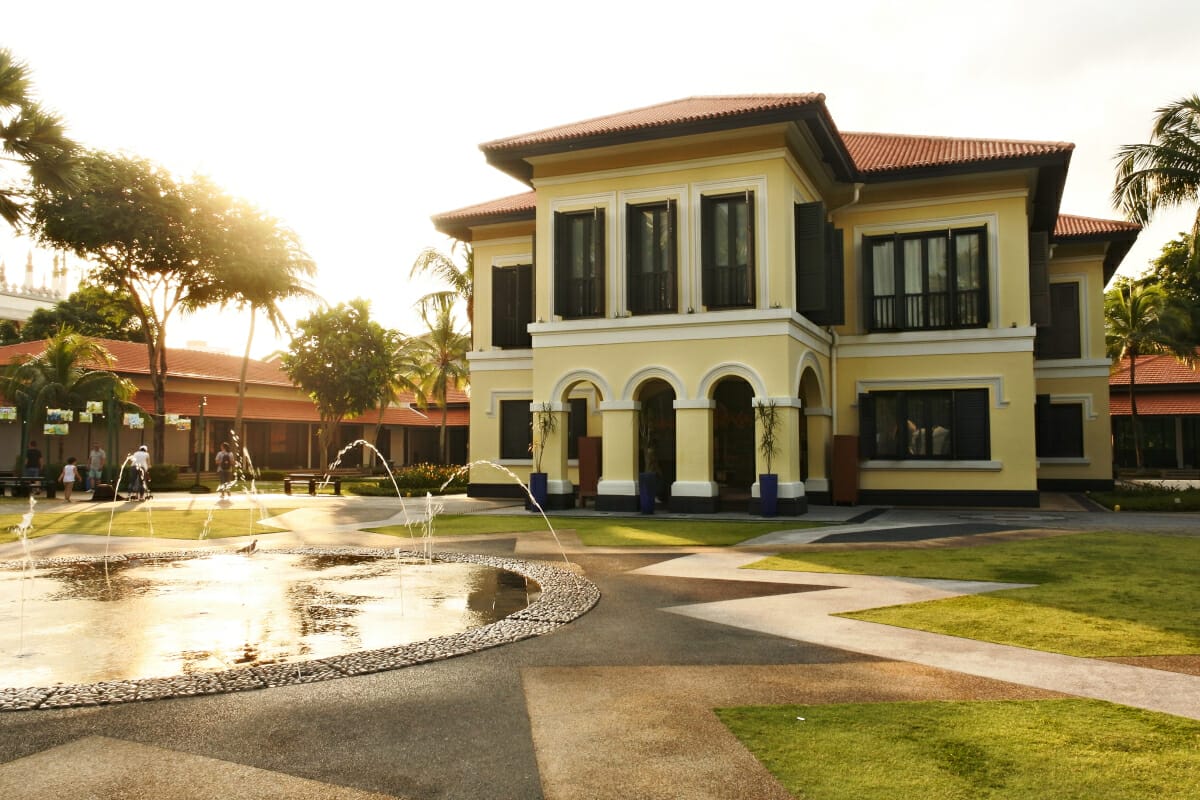
The historic Istana Kampong Gelam, once the seat of Malay royalty in Singapore, is one of the finest representations of traditional vernacular Malay architecture still present in Singapore. It was built between 1836 and 1843 and blends native Malay features as well as the Palladian style, which was prominent in England throughout the 18th and 19th centuries. The Malay Heritage Centre which comprises a museum and visitor centre has been meticulously renovated and is now open to the public.