





We are all familiar with Singapore’s aesthetically advanced skyscrapers, vibrant social scene, awe-inspiring tourist sites, and peaceful beaches. This Southeast Asian country, however, is much more than these features. The country is also known for its important history and rich heritage. In this island city state, what we now see as residential cities were originally undeveloped villages. Singapore’s villages were famed for their culture, and the British influence on them was significant. Let us travel back in time to learn more about these various villages.
Changi Village
In the years leading up to World War II, Changi was a picture-perfect community. Then, from the 1890s through the 1920s, British troops arrived and transformed the area into a lively recreation centre where military men and their families, as well as local bargain hunters, gathered for inexpensive goods and more. However, do not anticipate traditional colonial bungalows. Up until the 1960s, Changi Village was still made up of attap houses.
Changi Village has undergone numerous transformations. The once-blooming, bustling suburbia had become a struggling kampong after the British troops left in the 1970s. As a result, the government has announced plans to rebuild Changi Village. The ground surrounding Changi Airport was renovated, and kampung houses at Changi Village were replaced with low-rise HDB flats and services including a bus terminal and a hawker centre.
Geylang Serai
THEN, in the 1890s, when the British forced the Malays and Orang Laut to shift further inland and away from their ancestral homes at the mouth of the Singapore River, Geylang Serai was born. Geylang Serai derives its name from the village’s past as a lemongrass plantation. The area’s coconut and rubber plantations were replaced by tapioca during the Japanese occupation, giving it the name Kampong Ubi which means tapioca in Malay. With so many Malay settlers in Geylang Serai and its surrounding kampungs, the region quickly became known as Singapore’s Malay emporium.
When the number of kampungs reduced in the 1960s, more contemporary projects such as HDB apartments, retail malls, and theatres were built, things began to change dramatically. Geylang Serai had evolved into a contemporary residential district by the 1980s, with no old-school kampung in sight. Geylang Serai Market and Wisma Geylang Serai are built in the style of a lost kampung, with a double-pitched roof and designs inspired by the serai plant, ketupat, and serambi on stilts.
Kampong Gelam
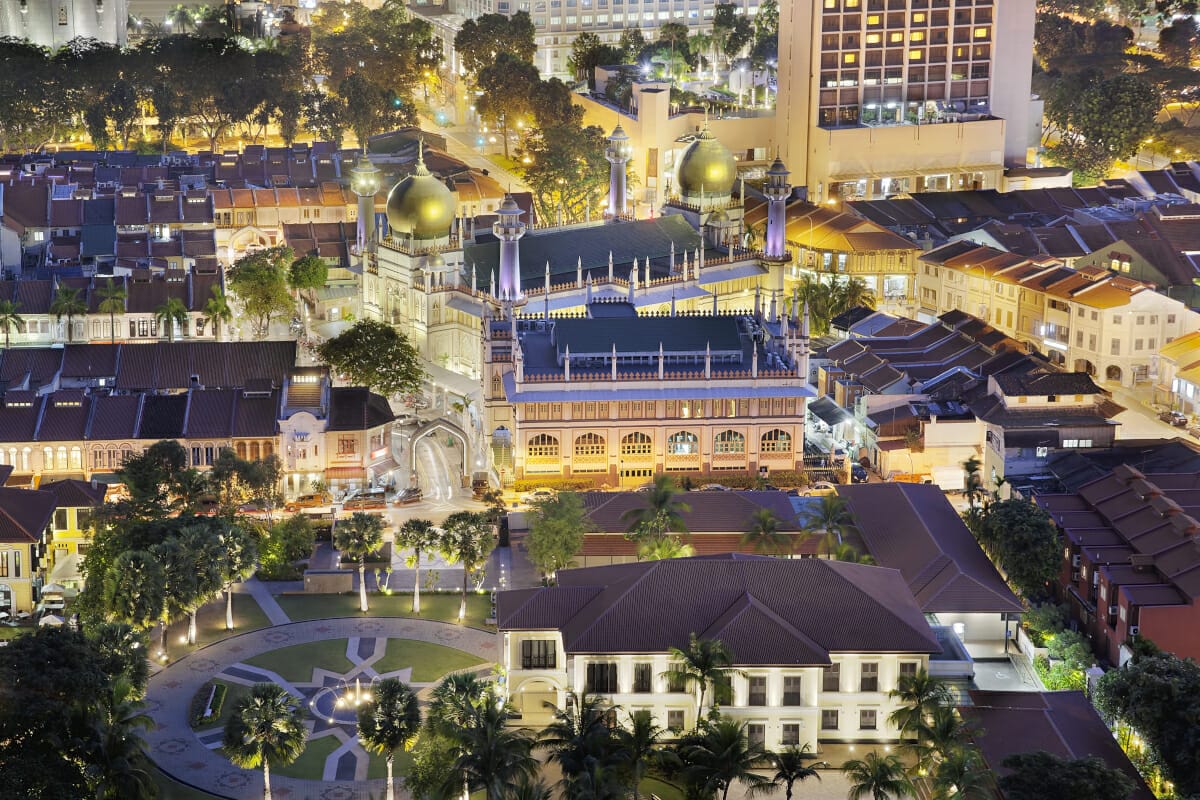
Kampong Gelam was a fishing community in the 1820s due to its proximity to the Rochor River. It was also originally ruled by Malay Sultans, and Sultan Hussain Mohammed Shah, his family, and entourage with a total of almost 600 people. His palace, the Istana Kampong Gelam which is now Malay Heritage Centre was surrounded by modest kampung-style buildings that housed Malay and Arab merchants.
Now, it is one of Singapore’s oldest neighbourhoods that undergo a transformation. It became a mix of lively cultures from over the world with grand cultural buildings, eye-popping street art, a variety of restaurants and pubs, and trendy boutiques.
Kampung Khatib Bongsu
Kampung Khatib Bongsu featured many zinc-roof houses, artificial ponds for prawn raising, and wooden jetties built on the river before it was demolished in 2007. It was located in the forested area of Yishun, at the mouth of Sungei Khatib, and was said to have existed by 1889. It was also a popular destination for nature lovers who came to hike and view birds. Fishing and durian picking are two more popular pastimes. When the building was demolished, however, these activities stopped.
Many birdwatchers, runners, cyclists, and fishermen flock to the scenic section of Sungei Khatib Bongsu, which is characterized by mangrove woods and mudflats. Parts of the surrounding area have also been used as a military training site by the Singapore Armed Forces (SAF) from the early 1990s. The remaining portions will be used to create a new nature park, which will be completed by 2024.
Kampong Lorong Buangkok

This historic piece of land has barely missed redevelopment in the past, but its future is uncertain. It was, however, a swamp before it became a kampung. In 1956, it was owned by Sng Teow Koon, a traditional medicine supplier who rented out small parcels of land to Malay and Chinese people to construct residences on.
Today, less than 30 families, including Sng Teow Koon’s daughter, live here. The neighbourhood remains close-knit, with everyone knowing everyone else and keeping their doors open as a reflection of the “kampung spirit” of trust and community. They are also used to tourists, so feel free to stroll the streets just do not trespass into their humble abodes.
Nee Soon Village
Nee Soon Village, at the crossroads of Thomson and Sembawang Roads, was one of Singapore’s earliest Chinese kampungs. It has a market, a post office, and a community centre. It is also thought to have begun in the 1850s, when it was known as Chan Chu Kang before being renamed after Lim Nee Soon, a notable businessman who made important contributions to the rubber industry.
Until 1979, when the famed Nee Soon Market was destroyed in a fire, business at the kampung was as usual. The rest of the village was razed in the 1980s, and Yishun New Town was built after major redevelopments. Springleaf Nature Park, which has a lot of biodiversity and is a beautiful place to walk around, is part of it.
Pulau Seking
With 44 kampung houses and no roads or cars, Pulau Seking was Singapore’s second last offshore community. It is a small island off the southern coast of Singapore roughly the size of 10 football fields. According to legend, the island was named after a pirate queen from the Johore-Riau Archipelago named Keng, who resided on the island with her followers in the 18th century.
Before the islanders were relocated to make space for the creation of a landfill, it was home to the last Southern Island kampong settlement. Despite the fact that the islands off Singapore’s south coast are known as the Southern Islands, the Urban Redevelopment Authority (URA) classified Pulau Seking as one of the Western islands in its 1997 Concept Plan.
Pulau Tekong
Pulau Tekong was a prosperous trading center for Pulau Ubin and Johor before it became the location for many National Service (NS) ghost stories. By 1898, the outlying island had a scattering of kampungs all over it. It had roughly 5,000 residents until it was cleared for military usage, the last of whom moved out in 1987.
The Singapore Army uses Pulau Tekong entirely as a training site. It is one of the islands that serves as a training ground for the Singapore Army, along with Pulau Sudong, Pulau Pawai, and Pulau Senang.
Pulau Ubin
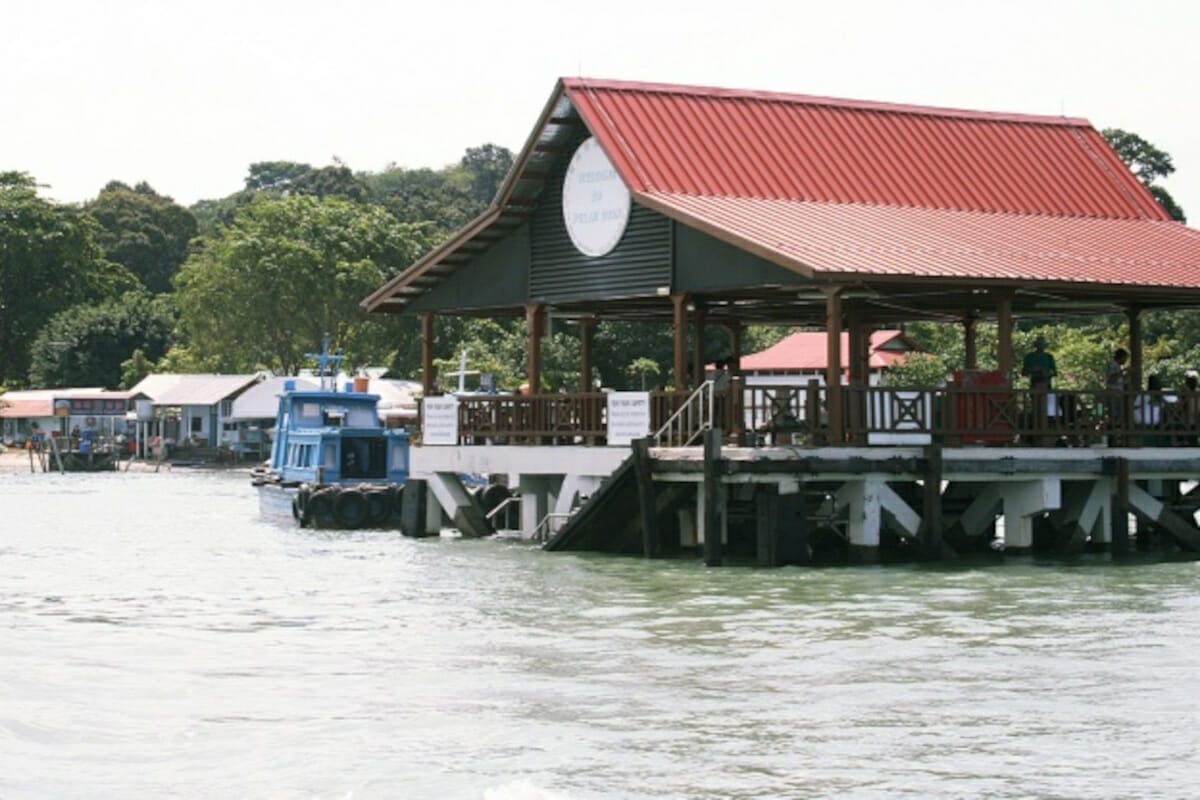
Apart from Kampong Lorong Buangkok, the only other remaining kampung is on the offshore island of Pulau Ubin, where time has seemed to stand still since the 1960s. It offers a unique off-the-beaten-path experience with wooden cottages, including a century-old residence, twisting wooded walks, and lush flora and animals. The Orang Laut also known as sea nomads and indigenous Malays of Bugis and Javanese ancestry were among the first settlers in the early 1800s.
It is also the only spot in Singapore where you may experience a rural way of life, a grounded antidote to the mainland’s modern lifestyle. Because there is no electricity or running water in this area, inhabitants rely on diesel generators for power and wells for water. They also depend on traditional farming and fishing for livelihood.