

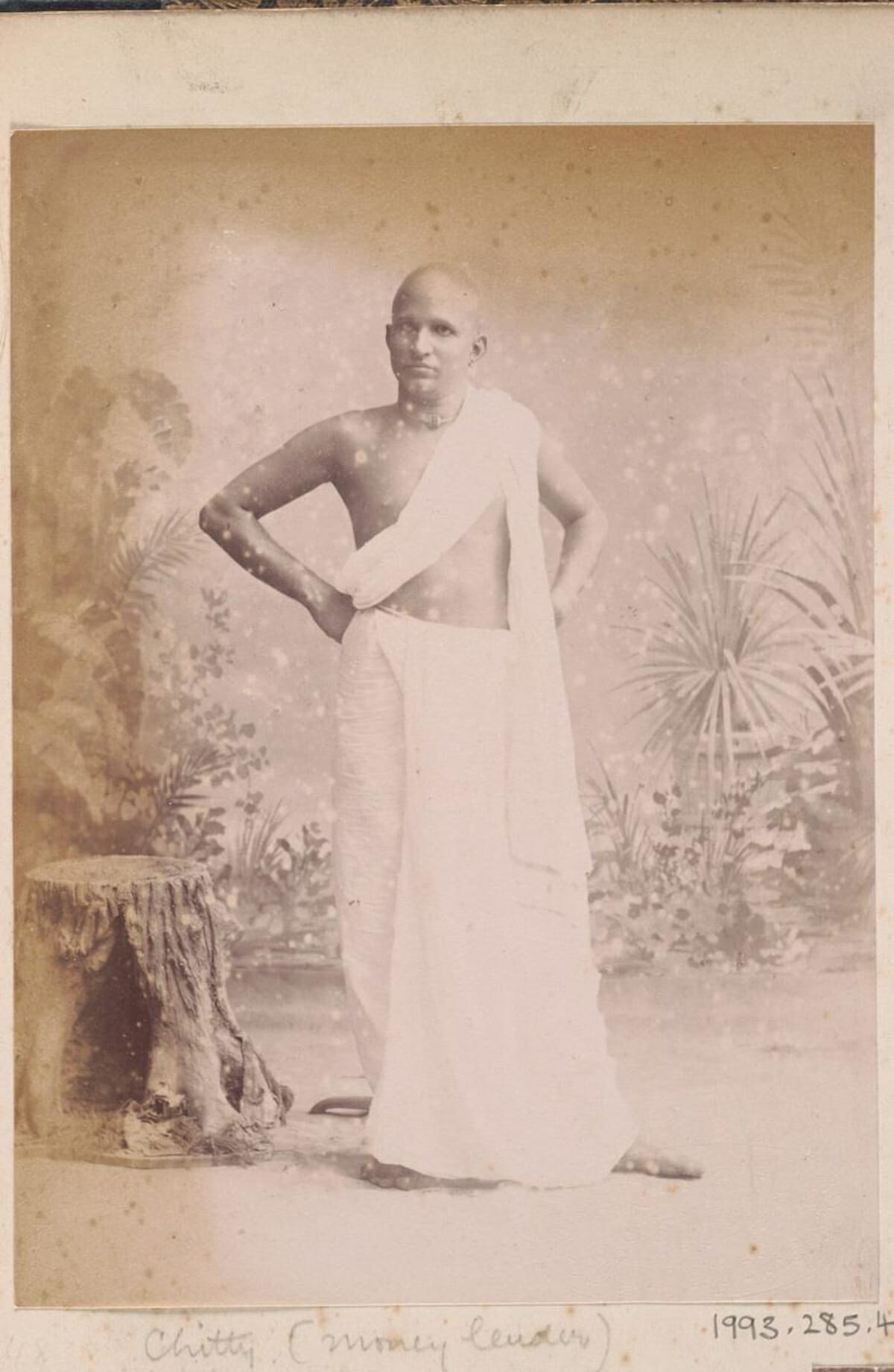
Singapore has come a long way to achieving widespread prosperity and become one of Asia’s financial powerhouse. But did you know that the first foundations of Singapore’s
private bankers and moneylenders are by the Chettiars?
The Chettiars are a subset of the Tamil community that originated from Chettinad in Tamil Nadu, India. The Chettair’s main trade used to be of precious stones but they later transitioned to become financiers and planted their roots in Singapore as far back as the 1820s. Singapore’s Chettiars were easily recognisable by their attire, where they’re usually shirtless, dressed in white dhotis (a type of sarong) and having vibuthi-smeared foreheads.
When the Chettiars arrived in Singapore in 1824, they lived in kittangi, shophouses where they ran their money-landing and banking business, which are mostly located in Market Street. Fluent in Tamil and Malay, the Chettiars served many clients in their sparsely living area of a few square feet. The kittangi typically features a presence of a low wooden desk, a cupboard, and a safe, with the addition of a mattress to sleep in at night.
At its prime, Market Street had 300 to 400 Chettiar firms that are housed in seven kittangis. However, the increasingly strong influence of homegrown banks rendered the Chettiars slowly losing their use, and led to Market street seeing a reduction of Chettiars. In the 1970s, Market Street still had six kittangis as well as 30 to 40 Indian-owned businesses, but now it seems that this reputable trade has become a part of history amidst the skyscraper buildings in the Central Business District.


