


A gently flowing huge river runs through the heart of numerous cities. Bridges are more than just buildings that span bodies of water; they are also engineering marvels and testimony to the lives and histories of civilizations in a town, city, or country. The Singapore River is the most famous river in the popular island city-state of Singapore, and it is crossed by multiple ancient bridges. Here are the five fascinating stories about the bridges that run around the island city-state, providing remarkable views into Singapore’s past.
Anderson Bridge
The steely facade of Anderson Bridge which was completed in 1910 and named after then-Governor of the Straits Settlements and High Commissioner for the Federated Malay States, Sir John Anderson, appears like something out of a dystopian film. It also has a tragic past wherein the soldiers placed severed heads of spies and criminals around it as a warning during the Japanese occupation before it became part of the famed F1 Singapore street circuit.
Cavenagh Bridge

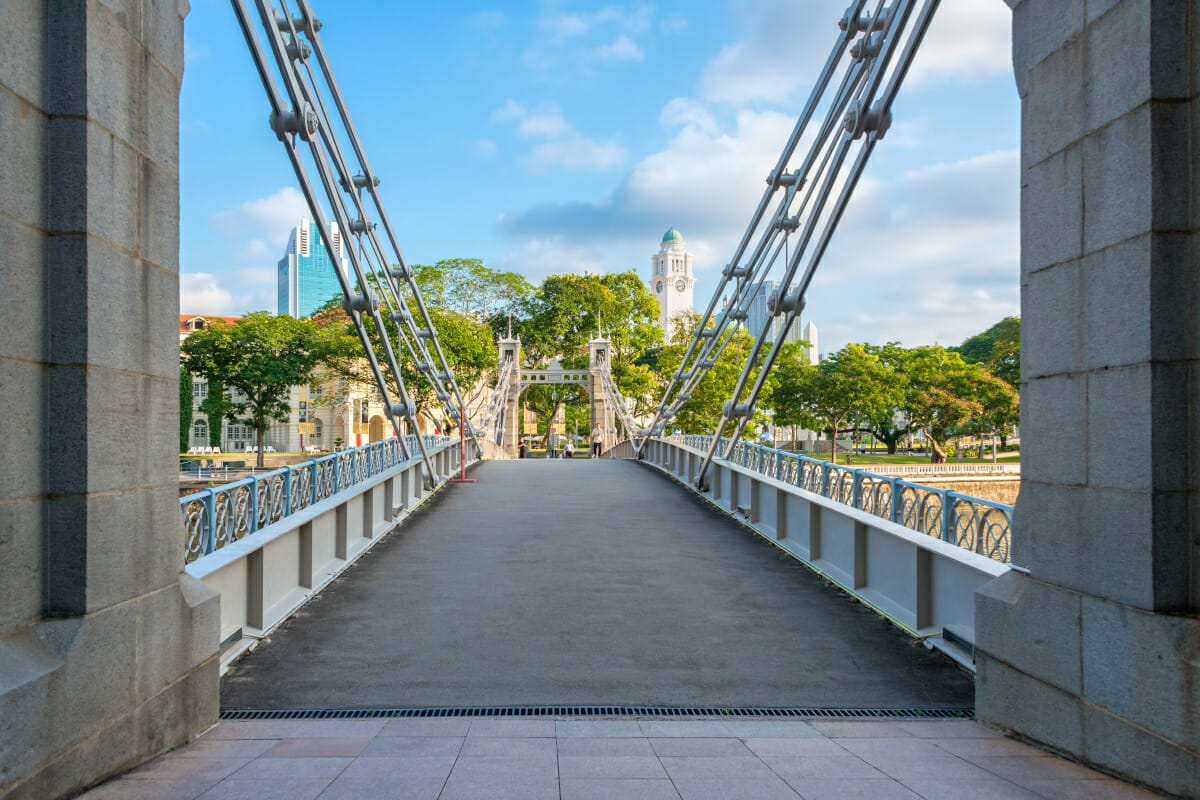
Cavenagh Bridge holds the title of “the oldest bridge in Singapore that still exists in its original form”. The city’s only suspension bridge connects the Civic District on the northern bank of the Singapore River to the Commercial District on the southern side. After the Duke of Edinburgh’s visit in 1869, it was given the name Edinburgh Bridge. It was eventually renamed Cavenagh after Sir Orfeur Cavenagh, the last India-appointed Governor of the Straits Settlement. The Cavenagh coat of arms and original signage may still be seen at each end of the pedestrian bridge.
Coleman Bridge
Coleman Bridge was designed by and named for the city’s original architect, Irish-born George Drumgoole Coleman, and displays colourful murals depicting Singapore’s past including figures like Sang Nila Utama, the Srivijayan ruler who gave the city its roaring name. The bridge, however, has had a couple of facelifts since 1840 due to its construction. It began as a nine-arched brick bridge connecting Old Bridge Road and Hill Street. Then it was replaced by an unsteady timber bridge, which was decommissioned 20 years later and replaced by an iron bridge and stood for a century. It was demolished in 1986 to make room for a concrete counterpart that retains the lamp posts and iron railings from its early days.
Elgin Bridge
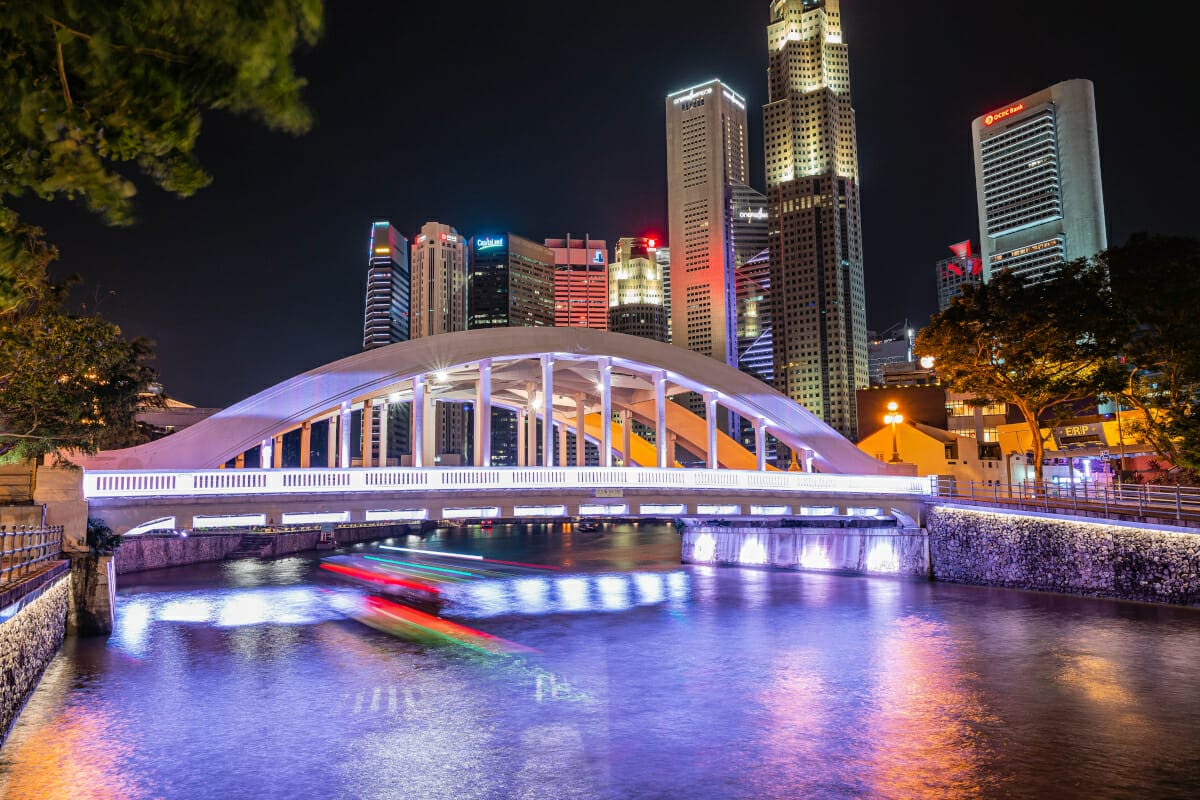
This bridge which was first opened to traffic in 1929 in its final concrete form, dates to 1819 when Sir Stamford Raffles arrived on our shores making it one of Singapore’s oldest bridges. It began as a wooden footbridge that connected the Chinese on the south side to the Indians on the north bank of the Singapore River. It was then replaced with Presentment Bridge, a temporary wooden drawbridge also known as Jackson Bridge and popularly known as Monkey Bridge because it was narrow and required monkey-like agility to pass past the crowd. In 1862, an iron bridge from Calcutta was built in its place and it was named for James Bruce, the 8th Earl of Elgin and Governor-General of India. The final product is today’s concrete version which is adorned with cast-iron lamps designed by Cavaliere Rudolfo Nolli, an Italian sculptor.
Read Bridge
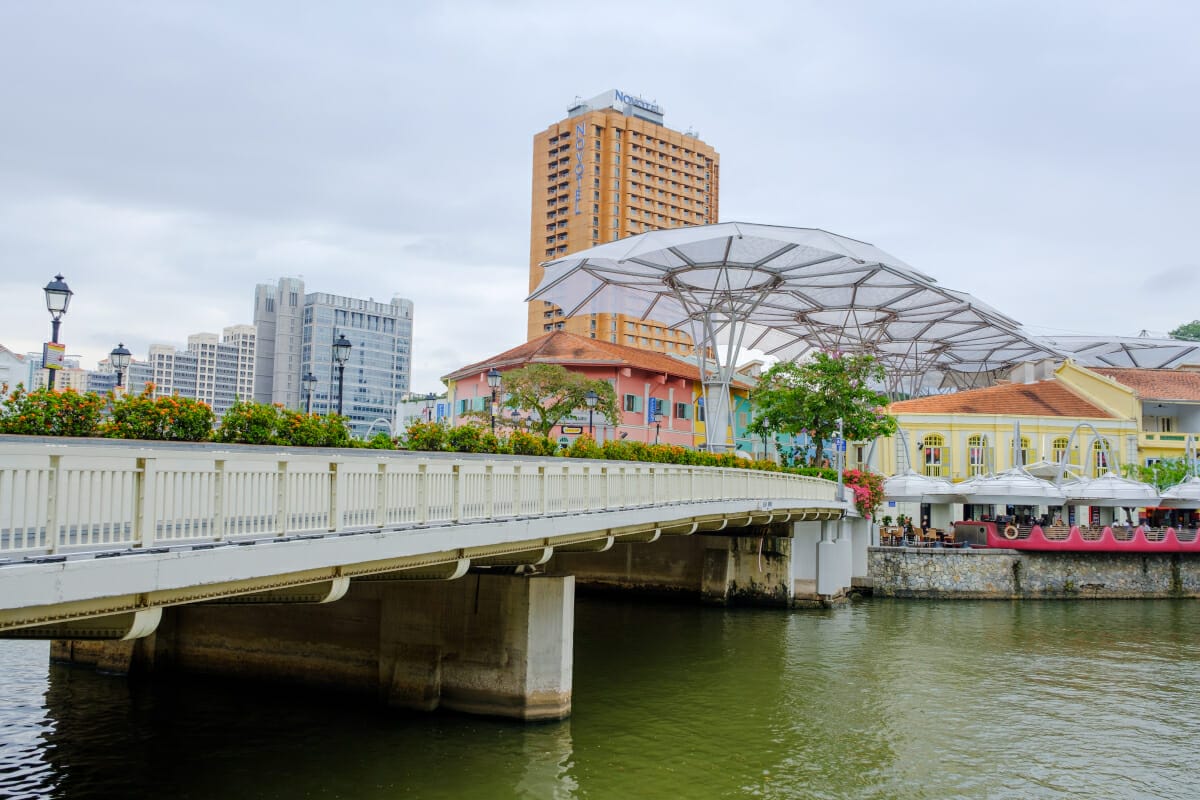
The beam structured Read Bridge which is located in the centre of Clarke Quay has some interesting stories to tell. It was completed in 1889 and it was named after William Henry Macleod Read, a significant figure in Singapore and Consul to the Netherlands in the 1800s. Aside from its official name, it is also known as the Malacca Bridge because to its vicinity to Kampong Malacca on Merchant Road and the Green Bridge, owing to its colour at the time. But it is better known as The Bridge, a favourite gathering and drinking spot for late-night revellers. It was also a gathering area for tongkang rowers and laborers to listen to Teochew storytellers.


